Showing posts with label G322A TV drama. Show all posts

Friday, 22 March 2013

Analysing camera work in TV Documentary

Camera shots found:

- Mid Shot
- Extreme close up
- Wide
- Close up
- Wide
- Tracking
- Aerial 
- Panning
- Tilt


The wide shots are used to show the whole herd, suggesting a sense of togetherness and a community among the elephants. All of the interviewing sections are shot in mid shots. Extreme close ups of Echo the elephant near her eye shows the animal's emotion and the audience has empathy for her. The aerial shot sets the scene of the subject being documented and allows you to follow the elephants on their journey which sets up the story line of the documentary. Panning shots used to show a large amount of scenery and it also follows the action. Camera tilts upwards from Echo's feet to her head, this emphasised her size and how she is important to her family. 

Does the camera work add to the authenticity of the documentary?

The camera shot does enhance the documentary's authenticity, because you are able to see nature at different angles and interpret and receive them in a different way. It makes the documentary less tedious because it arranges and mixes up the footage of the animal and the interview. This creates more of a mood, because if the interviewer says something heart warming and then cuts to sad footage consisting of close ups it has more of a impact. 

Does the documentary draw your attention to the presence of the camera operator or does it attempt to conceal it?

The shots are smooth and you don't notice the camera man because you are fixated on the footage of the elephants and the music which sets the tone in turn. You are too focused on the documentary to notice the camera man, it is the last thing on your mind.  

Thursday, 21 March 2013

Analysing camerawork in TV Drama

 
Merlin (BBC)

Different shots found in sequence:
- Close up
- Mid Shot
- Two Person Shot
- High Angle (half wide)
- Overshoulder
- Wide
- Tracking


How is the importance of the setting and action emphasised by the camera movement?

At the beginning we are shown the antagonist in a mid shot who then throws down the swords and the two male protagonists have to fight eachother. The two characters (Arthur and Qwaine) are shown in a two person shot which symbolises they are friends and are together. When they talk to eachother it cuts to close ups of them talking. This establishes who is who and what they feel about the situation just by their eye contact. Without using dialogue in that shot is very powerful, because it is all said by body language and the camera shot. 

When they both pick up their swords and face eachother it cuts to a high angle shot, showing them in the 'arena' which highlights they are alone and must fight because there is no way out. High angle is very effective in making them look small and helpless, because you are positioned below you which emphasises they are at their last resort. Overshoulder shots and close ups flick back and forth in the fight scene. The overshoulder allows you to see more sword action and the opponents reaction. The tracking of the characters is hand held so the shot is shakey and sudden, this emphasises the situation and the fast pace action within it. The cuts between the shots are quick and keeps up with the speed of the fighting. 

Through camera movement you can establish the emotion the characters are feeling through the close up shots which make you intimite with the characters (there are no close ups of the antagonist because you are supposed to feel distant from them) and keeping in close to the action. The high angle and wide shots set the location and the situation of where the action sequence is taking place.      

What is the effect of the choice of camera shots?

The choice in camera shots are more effective then if you were to go with several mid, wide and extreme wide shots, because you wouldn't have the same reaction. You'd be far away from the action and it would be boring to watch. With the camera shots they have used you are close to the action and in some areas its hard to make out what happened which gives it that sense of mystery, but at the same time you get to see some action. If it was all in wide shots then the action would be slow and have no exciting edge, it would look fake and unrealistic.   

Tuesday, 19 March 2013

In the Flesh


Show Name: In the Flesh
Channel: BBC Three
Method of Watching: TV/BBC Iplayer
Season/Series: British TV Series
Genre: Zombie Drama
 
In the Flesh is a new 3 part BBC Supernatural drama series which began airing on BBC Three on 17 March 2013 at 10pm. The show was created and written by Dominic Mitchell. It is set after the zombie apocalypse and focuses on zombie teenager Kieren Walker as he reintegrates back into the local community.

Episode Summary:

Partially Deceased Syndrome sufferer Kieren Walker returns home to the cauldron of Roarton, but doesn't receive a warm welcome from all. His parents, Steve and Sue, are undoubtedly pleased to see him, but his sister, Jem, isn't so ready to pick up where they left off when Kieren died back in 2009. Meanwhile, the zombie-hating Human Volunteer Force, led by the violent Bill Macy, are ready to take action against any PDS sufferer reintegrated on their patch. A zombie like Kieren was found in Roarton and was shot by Bill Macy.
Was it conventional to it's genre? Yes, it was quite effective putting Zombies with modern day life without making it look cheesy or overall bad. I quite enjoyed it and the reactions of people is quite realistic.

OPEN OR CLOSED?

Open Narratives: Usually with soap operas
- No sense of a ending, could go on forever
- Many more characters, characters shift in and out
- More than one story line
- Time is more chronological  
- Different knowledge to characters then audience

Closed Narratives:
- Audience aware that they are watching a complete story, with a ending in mind.
- Small number of characters, so it goes into more in depth on them
- Characters have a hierarchy of importance
- Audience can make verdicts on the characters
- Time is compressed unlike Open Narratives
- Times and events are usually special to the story line, not linked with real world

Since its a 3 part drama it is a closed narrative because the storyline can only go on for so long and there has to be a resolution and conclusion.
 
Representation:
 
Age:
Teenager Jem came across as rebellious and moody when she made her first appearance, but throughout the episode she showed a softer side. Kieren on the other hand is quiet (mainly because of the change in situation), so is the contrast but he and his sister bond a little bit in the first episode.
Bill Macy was the dominant one in the HVF and comes across fierce and
violent. He is almost portrayed as a stereotypical general in the army like you see in films.
 
Status and Class:
The HVF and PDS are clashing. Human Voluntary Force don't like the Zombies (Partially Deceased Sydrome). They are two different sides, and one side wants to get on with life while the other wants them head. This dislike and hunting them down can be interpreted into serious real life scenarios. One example could be the genocide in Rwanda, but not as extreme.  


Thursday, 14 March 2013

Case Study: Hollyoaks

 Hollyoaks Extract

Scene 1 - In the first scene a couple are sitting on the bed and the female character has to tell another character about their relationship. Within the scene the shots are close ups and two shots of the characters when they are in conversation. The speaker at the time is focused on and only in the two shot is the other characters reaction to what they are saying are shown. The room is that of a typical blue for boys which suggests they are in his bedroom. After the scene the male character sips his tea and it pan right to the female character looking away with concern before cutting to the opening on scene 2.

Scene 2 (2&3) - It opens with a environment/over shoulder shot, focusing on the character entering. The location is isolated with just those two characters conversing. They are both wearing similar overalls which suggest they work together. The location fits the mood of the conversation as it is isolated and derelict which has negative connotations which fits the topic of murder. As there is a serious confrontation the shots mainly consist of close up and mid shots to capture the characters emotion and the seriousness of the threat in the others. The weaker is focused on towards the end of the scene and their is a over shoulder close up of his face with the threatening character in shot, he looks away with a serious decision to decide upon. It then sharp cuts from him looking down to scene 3.

Scene 3 (4&5) - The previous serious scenario is then overlooked by the opening on scene 3, as the girl drinks her tea/coffee in a local cafe. The cafe is well lit and has many different produce with nice colours, a typical stereotypical coffee cafe. Each characters clothes say different things about them and suggests different social groups for example the girl in the tracksuits is grouped in to the hoodie section of adolescents. In between the beginning and the end their is a confrontation with 'past friends' and spiteful things are said, at the end the character watches one of the character who she was talking to leave and then look into the distance.

SIMILARITY: ALL THREE SHOTS END WITH THE DISTRESSED CHARACTER LOOKING AWAY  
Scene 4 (6) - Scene 4 is then opened with a environment shot showing the location of another character and a new storyline. The location is nice which implies the character is well-off or stable financially and is well kept.

In each scene the sound focuses on the characters dialogue and any background sounds to enhance and allow the audience to relate and understand the environment.  


Representation of age in TV Drama

Children

Tracy Beaker
Most children in my generation grew up with Tracy Beaker. Tracy Beak represents the bossy, difficult, those 'little devils'. Tracy however lives in the "Dumping Ground" which also puts her possible behaviour into context. Within the program its got other examples of children, from the shy timid ones to the weird imaginative ones. This shot shoes Tracy pointing and shouting, showing her aggression towards us and other people. The pattern and background behind her shows us Tracy has a pleasant childish side with the bright colours and decoration.  


Outnumbered


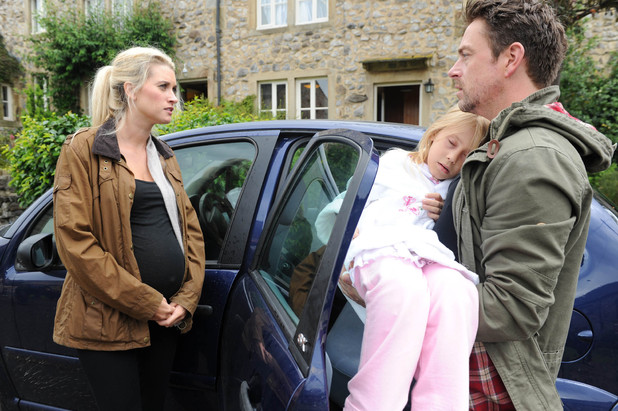
The children in outnumbered are portrayed as irritating. They act their age. Karen plays with toys and has that innocence about her as she is the youngest and always has a chatty colourful personalty. Ben is the weirdest child out of the family and probably is the most understood one. In the image we see Ben being a issue and embarrassing causing his father to carry him out of a public place. This shows adolescence and a sense of rebellion, less 'little angels' more 'little horrors'.


Youth

Waterloo Road

Waterloo Road shows the stereotypes of youth very well, representing them as rebellious and attracting disapproval. The uniform symbolises their rebellious nature by not wearing it properly and not looking smart and sophisticated, quite the opposite in fact. They portray mixed cultures and the idea of male dominance between groups (which is shown in this scene). This could trigger anti-social behaviour within a plot line which has been covered in the program. Waterloo road does focus on teen-related issues and it is teen-related issues dominant with the occasional adult issue. The style of clothing does give you the impression if all the characters in the shot that there is sub-culture divide (hoodies etc). 

E20

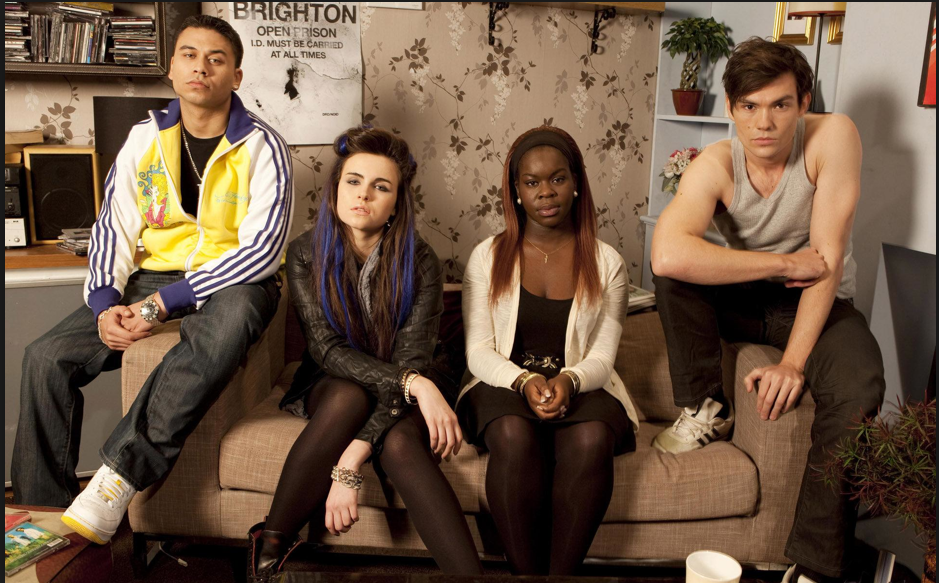
The representation in E20 is similar to Waterloo Road. It focuses less on their school life and more on their home life. Each character portrayed shows a different type of ethnicity or sub-culture. The way they sit also gives you a idea about their character so 'fat boy' in the yellow hoodie is relaxed which suggests he is a relaxed chilled out person and doesn't show the fierce chav criteria waterloo road represents. The girls in the middle give off different signals about their personality. The one with blue hair is sat in a suggestive 'I don't care' manner which suggests she has more of a rebellious attitude and is more if a adolescent nature. The other girl on the other hand is keeping all to herself and shows a seriousness about her. This suggests she represents the good-girl hard working group of the youth population which is overlooked by stereotypes. The other male is sat on a perch and the way he dressed suggests he is a sporty and 'regular' person. The background shows a typical youth flat with the CD collection and posters. 

Elderly 


One foot in the grave
Victor Meldrew is perfect example of a grumpy old man. He is stubborn and his catch phrase "I don't believe it!" clarifies the his resistance to social change. The image also shows him to be a bit of a fool with pen over his face, so maybe age is catching up with him. Clothing and furniture is are typical and realistic to an older persons house. 


Eastenders
Dot Cotton is one of the most iconic representations on Eastenders of the elderly generation. She is shown with nice clothes (which suggests wealth) and her smoking habit which is well noted in the soap opera. Similar to Victor Meldrew she is also cynical and a bit of a grump at times. She also is a christian which is portrayed through her actions and weekly comings and goings in church. From my understanding most people who believe in God are of a mature age and the faith in youth is declining.     


Monday, 11 February 2013

Representation

Refers to the construction in any medium (especially in the mass media) of aspects of "reality" such as people, places, objects, events, cultural identites and other abstract concepts such representations may be in speech or writing as well as still or moving pictures.
Refers to the processes involved as well as to its products. How they are constructed in the process of production and reception by people whose identites are also differently.

Sunday, 10 February 2013

"The Male Gaze"


(Laura Mulvery)
Laura Mulvery introduced the "male gaze" as a feature of gender power in film. Mulvey argues that in classic Hollywood films in particular women are merely represented to provide visual pleasure to men.  Her concept of to be looked at, exemplifies that women were merely shown on screen in classic Hollywood in order to provide men with visual pleasure and have an erotic impact. Mulvey argued that the typical key protagonist within a classic Hollywood film was male and the audience members where similarly typically expected to be men. 


Thursday, 7 February 2013

Cutting It Swede


Starring Kaley Bickle and Jake Allard
Behind the scene: Abigail Fish, Chloe Ward, Alice Denmark

Tuesday, 29 January 2013

'Cutting it' Notes

'Cutting it' is a scene from a TV Drama which we have studied.

(Error on slideshare caused rest of pictures not to show up on presentation)
 
Editing
 
The shots at the start are very quick in transitions with a sharp cut. As the scene progresses the shots get longer to fit in with the mood. When the female character is in the consultants it moves to fades, to fit in with the music. The sound and imagery need to be complimentary for the editing between shots to be effective.  
 
When she is in the consultants it is broken up with shots of him at the cafe waiting for her. The suspense is broken up into blocks and the fades between shots implies time passing. Instead of having all the action in one sequence the spreading of it is very effective to the audience.
 
We think the ring was re-coloured by computing software because realistically a ring isn't that shiny and we believe it to be made to stand out with a small change in lighting focus. The slow motion effect makes the character seem futile and helpless. It also drags out the action of the event and to make it dramatic, (possibly too dramatic).
  
 
Mise en Scene
 
Within the scene the location consists of a equal balance of exterior and interior shots. The consultants office and taxi cab would of been filmed in the studio building, whereas the exterior shots would of taken place outside,(cafe, road and hospital).
The scattered flower pots once the female character is hit increases the sense of tragedy. The idea of them scattered symbolises death and destruction. The floral dress she also wears compliments the flowers. The shot with the ring is very memorable because it was focused on and made very effective. During the scene the characters wedding run was shown during times of uncertainty and emphasises its importance to the characters and the storyline.
Lighting was behind them in the taxi to symbolise they are going away from the light, some bad might happen. The only artificial light is that in the consultants, its unnatural which makes the consultant different from the characters - not being natural and excludes him so he isn't as important.

Sound

Verbal - Dialogue
Verbal - Emotions and thoughts are portrayed through dialogue. It is mixed in with the background noise and tends to be the main source of direction in the scene.

Soundtrack - natural, pauses, silence
Natural - The natural noises in the scene where mostly traffic, passersby and the characters. The accident with the swerving car has a very distinct sound effect. When the male character runs across the road his heart beat is slow and causing us to focus on him. The heart beat emphasises the panic and shock he is suffering, hoping his wife is alive as he runs across the road. The music is synchronised with the heart beat when he's running, (moral dilemma).  

Music scene - themes, stings, bridges and motifs
Music Scene - The consultant scene starts the build up of sad music and tension. The slow beat makes it dramatic but also predictable.  The song playing is a hidden message to the audience "remember what you see", a sad tone then fades out.

Ambient sound - Background noise
Ambient - The dialogue is louder than the diegectic sound of traffic. This sets the scene.

Camera Angles

The two shot shows them together sharing happiness between themselves allowing us to focus on them. In the taxi the shots alternate to who is speaking, when you focus on him talking u can see her in the shot, but when she is speaking you can't see him in the shot. Its only her which could be seen with a selfless meaning.  

Ring is symbolic, by showing that their marriage is important to the relationship and storyline.
 
When she is crying their are mixed emotions. You can't tell whether she has been given good news or bad news. This is hard for the audience to tell so keeps them in suspense for longer until she says "guess what?"

POV - Point of view is given from both characters. This gives a connection between the audience to allow them to see the action in their eyes and feel empathy for them and wanting her to be alive. The only part which is hand held is the running sequence to emphasise the distress and worry.

The ariel shot of them lying down on the ground, distances them from us.


Tuesday, 15 January 2013

Key Features of Drama's (Improved)

Soaps:

Never ending story lines 
(Emmerdale)
Cliffhangers are left at the end of episodes which continue over several episodes. It keeps the audience gripped to their seats and retained into finding out what happens next. Usually when one story line finishes another one begins. 
 
Multiple Plots and Characters 
Story lines are usually interwoven. Scenes move continuously between different characters and plots. For example, in Eastenders the scenes cut from characters in different scenarios and occasionally cross over. 
 
Moral nature of story lines 
The story lines connect and relate to the audience about day to day social issues like teenage pregnancy, drugs and homosexuality.   
 
Social and domestic settings 
(Eastenders)
e.g. shops, pubs, homes, street, hospital and car journey. Soaps are shot in day to day places.

Simplified characters 
for easy recognition and sometimes to the point of their being stereotypes. Simple characters allow the audience to easily follow their time line and possibly feel empathy for them.  

 
Fantasy Drama: 

Special Effects
(Merlin)
CGI is a common feature in Fantasy drama. One example is Merlin with the Dragons and magic being presented with CGI and special effects. This is also common with Science fiction as well, because they use it to produce mythical creatures and not real beings. 
 

Characters
Usually in a Fantasy drama the series are focused around one or two characters, who stereo-typically have some sort of special ability.

*Research

Merlin for example is based on legends (Knights of Camelot, King Arthur, sword in the stone etc). A fair amount of research is undergone to get the characters and plot line close to the legend. Lengends can also be used as a stepping stone for plot lines in the series. In Merlin they changed certain aspects of the lengend to please the audience and make it more interesting. This also happened with Robin Hood (BBC), but by series 3 it just got ridiculous.  

 
Youth/Issue Based Drama:

Locations
Most dramas aimed at young people are based around schools or youth events like festivals, clubs, parties etc. One example of a youth drama is Waterloo Road. Issue based dramas would be focused around the characters home, work and leisure time.


Characters & Issues


(Waterloo Road)
Characters tend to have personal issues and scenarios which can then be related to the targeted audiences, so teenage pregnancy, drugs, drink and abuse. If it is based around school the range of characters would be varied and they would represent real people by the way they act and stereotype. For example, the class clown, trouble maker, the goody-two shoes.

*Audience 

Youth dramas does suggest who it is aimed at from its genre. Young people - Twelve Year Olds, Teenagers, University Students. 
Where as issue based dramas would extend more to adults, but still focus on the young adults because of risks and certain personal, educational and environmental. It doesn't focus on the political side.
  

Crime/Medical Drama:


Locations

(The Bill)

Crime and medical dramas both have similar conventions. They are based to where there profession is either a hospital (Casualty) or a police station (The Bill). They focus around the base and is present in nearly every episode.
 
Storyline
 
 In these dramas they follow usually a policeman/doctor or the patient/civilian in need of help. Each episode or a set of episodes focuses around one main plot with loads of sub plots going on in the background. In most story lines there is a conflict between personal and professional life. Also ethical dilemmas and romantic relationships are also other key features to some plot lines.

*Technical/Professional Realism

In these types of dramas techinical jargon are used and lingo related to their occupation. This makes them more realistic. Research is put to use in medical and crime drama to set the right tone and get the correct information across. One example is the diseases common or rare in hositpals and then they will explain the symptons and try to medicate and solve the issue. Medical dramas are also very good at creating awareness of illnesses, such as Cancer which is a tender subject to the population. This is the same as Crime dramas to make awareness of illegal activites, what is right and wrong.
 
(Some features overlap in most dramas)

(*) Improvements